
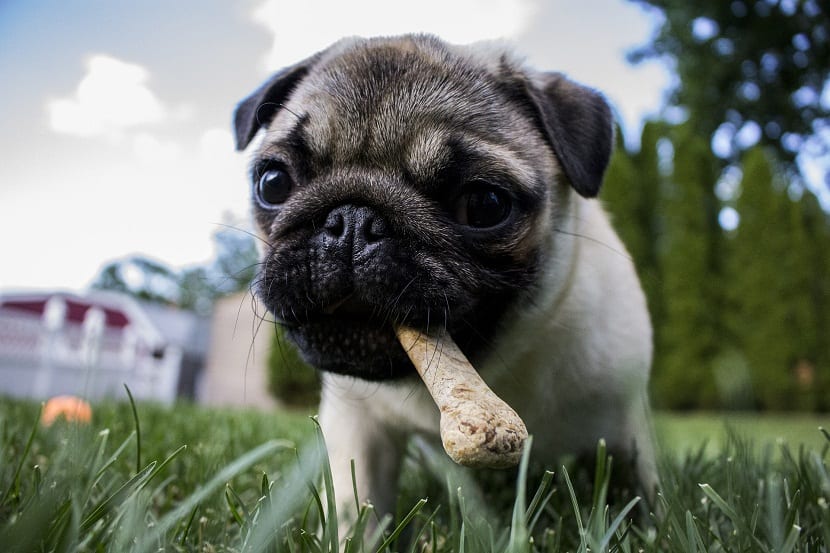
The steps necessary to feed your dog properly It involves some calculations, but it’s truly worth the effort. Helping your pet maintain a healthy weight isn’t a matter of chance, but rather of meticulously monitoring their energy needs, which vary according to age, size, and activity level.
Make a good eating plan
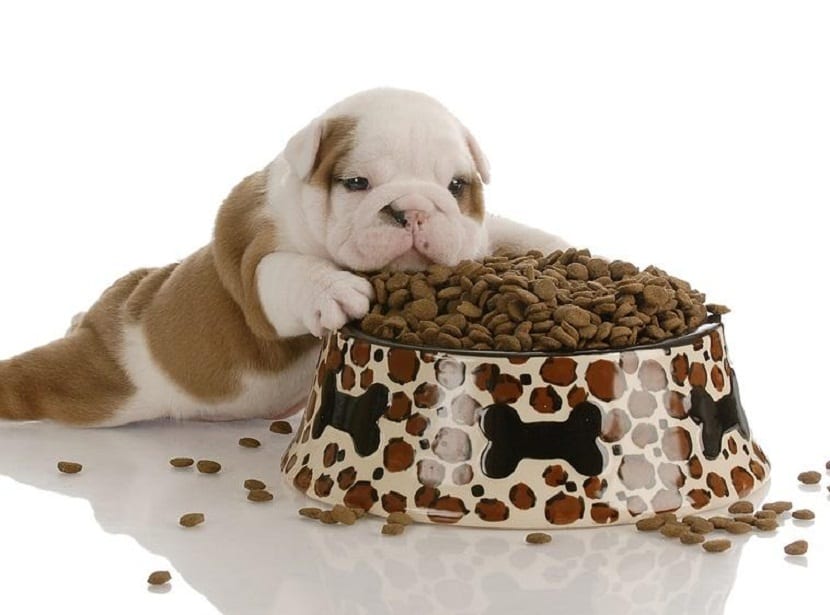
For dog owners who already know how should be the plan that they should follow daily to offer your dogs a healthy nutrition, based primarily on their caloric needs and that day by day they are accurately measuring each portion of food that they serve their pets, today we will show you one more step, which is of utmost importance to make sure that your dog actually you are eating the right amount of food daily.
It is essential to understand that the The perfect portion is not a fixed number.Contrary to popular belief, there is no magic number of grams that will work forever. A dog’s energy expenditure fluctuates depending on the climate (in winter they may expend more to stay warm), their weekly activity level, age, and whether they have been neutered, as neutered dogs tend to have a slower metabolism and require adjustments to avoid weight gain.

This is the last step to correctly establish the food portions for your dog and in addition to all the calculations and measurements that we commonly recommend, there is also something else to do, which is based primarily on observe your pet’s body complexion for at least three or four weeks, in order to see how they respond to the new amounts of food you serve them.
If you can see that your dog burns calories every day, you can try to calculate how much you lose in order to use that estimate to work out a good eating plan.
Adjusting the rations of what your dog eats

However, there are different elements which can make you achieve a proper estimate to help you make the eating regimen simpler, since only by observing your pet’s body, you can make adjustments to his eating plan if you think it is necessary, to keep your pet healthy. However, if you notice that your pet looks like they have gained or lost body fat, this is an indication that you actually need to make adjustments.
To perform this tracking, we must use the Body condition as a compassYou don’t need to be an expert, just evaluate three key points: the ribs (they should be felt by touch without pressing hard, but not visible to the naked eye), the belt viewed from above (there should be a slight curve behind the ribs) and the abdomen in profile (a slight upward movement towards the hind legs, avoiding the hanging belly).
There are different elements, which can alter the eating plan that you originally calculated for your pet and these are:
La metabolic rate of your pet is slightly different than usual

Although those dogs that are usually of similar sizes tend to be quite similar when it comes to their metabolism, several of them may have a metabolic rate that is slightly above or below normal. In this type of case, the daily caloric needs of the dog and consequently also its daily food needs, must be kept adjusted according to the way in which its body is currently reacting to what it consumes.
El Daily exercise it is different from what was planned
It is quite common for dog owners to plan a certain amount of time and exercises that they will do with their pet, but nevertheless, life usually gets in the way causing the dog don’t exercise as much as planned initially.
If you find yourself in this situation, you need to go back and calculate again how many calories will your dog burn when exercising daily and in the same way you will have to recalculate the portion of food based on the exercise you do. The same applies, if the opposite is the case and your pet tends to exercise more than you had planned.

Sweets sabotage strategy
Maybe this is possibly the most frequent reason why dog owners should be more aware as for the portions of food that serve them, since they may end up having weight problems.
This is because the treats are high in calorieswhich doesn’t allow you to accurately calculate food portions; causing your pet to rapidly gain body fat and even become overweight. That’s why it’s recommended to have a bag with a calculated amount of treats, as this way you can control your pet’s calorie intake. Ideally, the treats They should not exceed 10%. of the total calories for the day.

How to calculate proportions according to diet type
Not all diets are calculated in the same way because the caloric density It varies drastically between a dry food and a wet or raw one.
Quantity of dog food
Feed is the simplest option since the manufacturer includes a feeding chart. However, for quick reference, the small dogs They usually consume between 80 and 150 g, medium between 180 and 300 g great Between 300 and 550 g per day. If you change brands, it’s vital to check the nutrition facts label on the new bag, as the calories per gram vary.
Wet dog food
Wet food contains more water and fewer calories per gram, so the portion size is larger. The general rule is to feed between 3% and 4% of body weight of the animal daily.
Proportions for the BARF diet
The BARF diet is based on raw foods and is calculated as a percentage of body weight. A typical balanced composition includes:
- 40% meaty bone.
- 30% muscle (meat or fish).
- 10% of viscera.
- 10% fruits and vegetables.
- 10% off accessories (recreational snacks or bones).
Amount of homemade dog food
Cooked food follows similar guidelines to BARF. For adults, it is recommended to eat between… 2% and 3% of their weightIn puppies, this percentage rises considerably, reaching between 5% and 10% of their weight due to its rapid growth.

Tools for precise ration control
To avoid the mistake of serving food “by eye,” which often leads to a gradual increase in portion size and subsequent obesity, we recommend the following tools:
- Digital scale: It’s the most accurate method. A few extra grams a day can add up to a significant amount of weight by the end of the month.
- Measuring cups: They’re practical, but less precise. If you use them, mark the exact level with a marker to maintain consistency.
- Food diaries or apps: Very useful for those who mix diets or use BARF, allowing you to record extras and adjust the main ration.
Common mistakes when calculating portions
Even the most attentive guardians can make mistakes that affect their pet’s health:
- Do not deduct the prizes: Cookies or pieces of cheese add calories. If you give a lot of treats, you should reduce the amount of kibble.
- Daily adjustments instead of weekly: Changes in ration should be gradual and evaluated every 7-14 days, not day by day.
- Ignore the season: In winter, some dogs expend more energy; in summer, with the heat, they tend to reduce their activity and appetite, requiring a downward adjustment.
- Do not split the shot: Giving all the food at once can cause bilious vomiting and heavy digestion. Ideally, the portion should be divided into 2 or 3 daily servings.

How to tell if your dog eats too much or too little
The best indicator is direct observation and recording of physical and behavioral signs.
Overfeed signals
- Weight gain: Loss of waist definition and accumulation of fat in the neck and abdomen.
- Loose stools or diarrhea: The digestive system becomes overloaded.
- Lethargy: Excess calories that cause tiredness and lack of energy.
- Frequent flatulence: Constant, smelly gases.
Signs of underfeeding
- Weight loss: Very prominent ribs and bones.
- Food cravings: The dog is irritable or constantly begs for food.
- Yellow vomit: Bilious vomiting on an empty stomach usually indicates excessive hunger before eating.
- Very hard stools: Possible constipation due to lack of energy or fiber.
Special cases: When the dog eats a lot and doesn’t gain weight
If you notice your dog has a voracious appetite but remains thin, it’s crucial to assess the situation. This could be due to a extremely active metabolismHowever, it can also be a sign of intestinal parasites or underlying health problems. It is recommended to weigh your dog every 2-4 weeks and, if the trend persists, consult your veterinarian for personalized adjustments.

Common myths about dog food
It is important to debunk some popular beliefs to avoid risks:
- “They can eat the same as us”: False. Foods like chocolate, onions, grapes, or garlic are toxic to them.
- “Dogs self-regulate”: False. Many dogs eat beyond their energy needs because hunger is not always synonymous with satiety.
- “The feed cleans the teeth”: False. Although it has an abrasive mechanical effect, it does not replace brushing your teeth.
- “Homemade food is always better”: It depends. It’s only better if it’s formulated by an expert; otherwise, it can cause nutritional deficiencies serious.
When is a change of diet necessary?
There are clear signs that the current plan is not working:
- Life stage: A senior dog needs fewer calories and more joint support than a puppy.
- Digestive problems: Chronic diarrhea or excessive gas.
- Coat condition: Dull hair, flaking, or constant itching may indicate a lack of fatty acids.
- Specific health problems: Kidney disease, heart disease, or arthritis require therapeutic diets.
Any adjustment to the ration or change of feed must be done in a gradual, modifying the amount by 10% every few days to avoid digestive stress.
Maintaining a healthy weight through a balanced diet and appropriate portion size is the surest way to extend your dog’s life. Using measuring tools, weekly monitoring of body condition, and adjusting the plan based on physical activity and age ensure your pet has the necessary energy without compromising their joints or heart.
Índice
- 1 Make a good eating plan
- 2 Adjusting the rations of what your dog eats
- 3 La metabolic rate of your pet is slightly different than usual
- 4 El Daily exercise it is different from what was planned
- 5 Sweets sabotage strategy
- 6 How to calculate proportions according to diet type
- 7 Tools for precise ration control
- 8 Common mistakes when calculating portions
- 9 How to tell if your dog eats too much or too little
- 10 Special cases: When the dog eats a lot and doesn’t gain weight
- 11 Common myths about dog food
- 12 When is a change of diet necessary?