
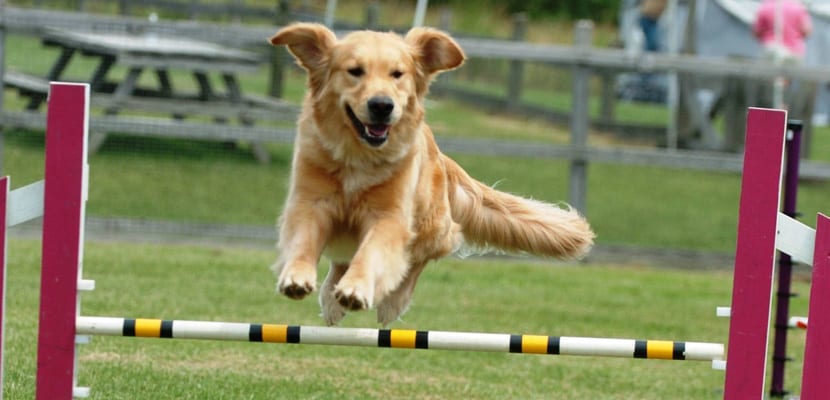
Dog clubs They are becoming increasingly common because they are places where owners and dogs share a hobby and a way of understanding coexistence. This hobby usually revolves around a dog sport, such as agility, so that owners and dogs interact while training for agility competitions, but there are many more dog clubs for mushing or for practicing obedience, search and rescue, mantrailing, canicross or simply structured leisure activities.
Belonging to some of these clubs is a great idea, since we brings great benefits For us and our pets. Not everyone goes to these clubs to compete; some simply do it to enjoy their hobbies with their pets, socialize, and learn more about dogs. So, if you want to start any time of year—or even winter—by getting in shape with your pet, this is a great idea and a way to enrich your daily life.
What is a dog club and what types exist?

In a broad sense, a dog club It is an association or organized group of people who share interests related to dogs and who meet regularly to train, learn, or simply enjoy the company of other dog lovers. They can be agility, canicross, or mushing sports clubs, obedience and training clubs, socialization groups, or even breed clubs focused on a specific race.
Breed clubs play a very important role, because complement the work Official canine organizations play a role in defining standards, promoting breed health, and providing specialized information to owners. Although some dogs may not have a pedigree or belong to new or hybrid breeds, there are usually associations or groups that are responsible for… unify responsible breeding criteria, health protocols and management recommendations.
In the case of sports clubs, the main activity is the practice of a structured canine sportAgility, mushing, canicross, competitive obedience, mantrailing, and detection are just a few examples. You can train to compete or simply as a hobby, with the sole aim of enjoying time with your dog and keeping it physically and mentally balanced.
Social benefits of belonging to a dog club

In a dog club we will find people with our same tastesIt’s a way to socialize and find people with the same interests to share opinions and ideas. This community strengthens our commitment to our dogs and improves the awareness of animal welfaresince information is exchanged about health, behavior, education and specific needs of each breed or type of dog.
Not only will we be able to socialize, but our dogs will too, meeting other pets and learning how to interact with them. In a controlled and safe environment, they can be prepared. socialization situations This would be difficult to organize on the street: encounters with dogs of different sizes, working in the presence of strangers, varied stimuli, or children, always with professional supervision when necessary. It’s a good influence for both of them.
In addition, many clubs organize community events Such activities include exhibitions, informal gatherings, open days, and small dog parties. These events allow humans and dogs to share positive experiences and improve the dog’s confidence in new environments, which is especially valuable for shy or fearful dogs.
In breed clubs, the social relationship is further strengthened: owners share information about the history and particularities of their breed, they discuss common health or behavioral problems and collaborate to maintain a balanced temperament and an appearance in accordance with the standard, always prioritizing well-being.
Physical enhancement for dog and handler

On the other hand, there is the side of physical improvementJoining a dog sports club is a great way to get back into physical activity. Both dogs and humans need exercise, and this kind of place allows us to do it regularly and without excuses, especially if we’re training for a competition. Plus, the fact that everyone is exercising together makes it more enjoyable and motivating than training alone.
For the dog, regular exercise helps to strengthen the musculatureIt improves cardiovascular endurance and increases flexibility and coordination. Movements such as jumping, zigzagging between poles, entering tunnels, or going up and down walkways involve muscle groups that are hardly used in routine walks, which helps reduce the risk of obesity and other problems associated with a sedentary lifestyle.
When the work is well planned, the dog develops better motor skills and balanceThis also prevents sprains, falls, and other incidents in daily life. A dog in good physical condition and with agility is less likely to get injured and can better handle the demands of everyday activities.
For the handler, training at a dog club is a fun way to stay active: running alongside the dog, walking in the countryside, setting up obstacle courses, or participating in trials improves the endurance and physical condition of the person. Just as with a gym, belonging to a group positively “obliges” us to continue training and not give up at the first sign of difficulty.
Mental benefits, discipline, and education

In these clubs, dogs not only socialize and they learn to communicate with the dog and with people. They will also learn discipline. Sport helps them improve physically and psychologically, and it will also make them easier to train. Many of these sports practice discipline, attention to the handler, and self-control, and therefore we can train at the same time to the dog while he’s having fun.
Figuring out how to overcome each obstacle, paying attention to the guide’s signals, or concentrating on a trail with distractions offers a strong Cognitive stimulationThe dog must think, make quick decisions and coordinate its body, something that keeps its mind active and reduces boredom, one of the most frequent causes of destructive behaviors at home.
The combination of physical activity and a positive experience with the owner also helps to reduce anxiety and stressMany dogs with insecurities, fears, or behavioral problems improve when they participate in canine sports, provided it’s done with a respectful approach tailored to their individual character. As the dog overcomes small challenges, its confidence and self-esteem increase.
All this work reinforces the human-dog bondThe handler learns to better read the animal’s body language, anticipate its reactions, and communicate through clear signals, while the dog relies on its human as a reliable social reference. This bond is then evident in daily walks and in their life together at home.
Additional services, advice and support from clubs

Many dog clubs, especially breed clubs and established sporting centers, offer expert advice about health, training, choosing a puppy, or suitable activities for each dog. They also usually have lists of responsible breeders that follow welfare protocols and health tests, something very useful for those looking to ethically incorporate a new canine companion into the family.
In the healthcare field, these clubs often promote surveillance of hereditary diseases and the performance of recommended tests for each breed, encouraging veterinary checkups, official X-rays, or genetic testing when appropriate. In many cases, they negotiate discounts with professionals and laboratories, so members receive economic benefits and the club receives data that helps to continue improving the health of the canine population.
In addition to the technical aspects, some clubs offer Additional benefits such as discounts on dog daycare, boarding, or training courses, priority access to seminars and workshops, or the possibility of using specific facilities (agility courses with competition obstacles, fenced recreation areas, classrooms for talks, etc.). All of this creates an environment where the dog feels familiar and safe, and the owner finds constant support.
For those who do not wish to compete, most clubs allow training at a flexible pace, with the idea of enjoy the processTrain once a week, or whenever possible, without pressure, simply to spend quality time with your dog. With proper expectation management and a good emotional approach, dogs usually enjoy these sessions immensely.

Combining community, sport, advice, and a good atmosphere makes dog clubs one of the best resources to enrich the life of any dog and its family, creating healthier relationships, more balanced dogs, and better-informed and more committed owners.
Índice