

Are you planning to go on vacation soon? Have you thought about whether you’re going to take your four-legged friend with you or leave him at home or in a kennel? This is very important to have clarified before leaving, since this way both he and you can be calm and spend those days or weeks happy.
If you have no idea what you’re going to do, don’t worry. Here you’ll find a very comprehensive guide to answer the question of “What do I do with my dog on vacation?”We’ll consider all the possible options so you can choose the one that best suits your dog and your type of trip.
[related url=”https://www.mundoperros.es/tips-to-spend-the-summer-with-a-dog/”]
Before deciding, it is essential that you take into account aspects such as your dog’s characterConsider your dog’s level of socialization, the length of your trip, the type of destination you’re going to, how you’ll be traveling, and your realistic chances of ensuring their well-being. Sometimes what we want most (always traveling with them) isn’t what’s best for them, and other times the opposite is true: the best thing for the dog is to accompany you.
Should I leave it at home or at the residence, or should I take it with me?

The first big decision is choosing whether the dog falls (with caregiver, friends, family or residence) or if travels with youThere is no single correct answer; it depends on:
- Travel time: A weekend getaway is not the same as three weeks away.
- Dog’s temperament: If he is very sensitive, fearful, or unsociable, some changes may cause him a lot of stress.
- Health status and age: Very old dogs, dogs with chronic illnesses, or very young dogs may need special care.
- Type of trip: Very long journeys, with many stops or to places without pet infrastructure can be hard for him.
- Actual accommodation options: There are destinations with many pet-friendly options and others where it is almost impossible.
Generally, if it’s only going to be a few days, they can stay at home or in a care home, as long as they are properly cared for. But if it’s going to be longer, and the destination and type of trip allow it, the ideal option is usually to take it with youThese animals they are not made to be aloneTherefore, it is highly recommended that they are always in the company of someone, and it is better if it is yours, because you are not a stranger to him.
If you leave him in a care home or with a caregiver, he may miss you and have a hard time if he is very attached to you, especially if he hasn’t had a proper socialization. prior adaptationLater you will see what you can do to make him calmer and feel safe, even when you are not there.
Never leave him alone at home. For several days, a dog might become very anxious and, as a result, could destroy furniture or other objects, injure itself trying to escape, suffer health problems due to lack of food or water, and bark continuously, causing conflicts with neighbors. Beyond the material damage, the most important thing is the great suffering a dog can experience when left completely alone for days.
Knowing that it is essential that she stays in someone’s care or travels with you, let’s look at it in detail What do we have to do? whether we leave it at home, in a residence, or if we take it on vacation.
How to leave your dog at home in someone’s care

Leaving your dog at home is one of the least stressful options for many animals, because remains in its familiar surroundingsHowever, it requires good organization to ensure that your needs are met at all times.
To be able to leave your dog at home, it is recommended to start find a good caregiver at least a month beforeThis way, you’ll have enough time to find the right person, and your dog will also have the opportunity to meet them and get used to them. The more sensitive or fearful the dog, the more important it is to start this adjustment period early.
This person does not need to stay with the animal all day, but they must:
- Go several times a day (In dogs, at least 2-3 times for walks, food, play and companionship).
- Take care of their feeding following the guidelines you give him.
- Change the water daily or every time I go.
- Take him for a walk enough time for him to exercise and take care of his needs.
- Spend some time interacting with him (cuddles, play, basic training).
For this option to work, it has to be a trusted person you already know, or someone who has good referencesIf you know a friend or family member who can do you the favor and whom your dog already adores, that’s an excellent solution. If not, you can look online or on specialized platforms for someone who takes care of animals during vacations.
If you choose a professional caregiver, it is highly advisable that conduct a sort of “job interview” with him To find out who they are and what experience they have. Some useful questions:
- If you have or have had dogs and what kind of breeds has he cared for.
- How long have you been caring for animals? and how often does it do so.
- What to do in case of emergency (illness, escape, accident).
- If you have liability insurance and how it acts in the face of potential harm.
Only if it inspires confidence and communication is clear can you consider having it for a few days. 2 or 3 day trialLeave your dog with you for a few hours before your trip. This way you can observe how your pet behaves, whether it eats well, if it’s calm, and how it reacts when you arrive.
Extra tips to prevent your dog from suffering while with its caregiver
To minimize your dog’s stress when you leave, it’s important that adapt it little by little to his new caregiver:
- A few weeks earlier, Leave it for a few hours for several days so that they can get to know each other.
- Gradually increase the time without you, until the dog feel comfortable in your company.
- Prepare a list with daily routines: feeding times, walks, medication if any, tricks he knows, things that scare him, etc.
- Clearly state what to do if the dog gets nervous or sick.
If your dog is particularly insecure and has a very bad time when left with other people, it might be a good idea work beforehand with a dog trainer to improve their socialization and adaptability, so that future absences are not so difficult for them.
How to leave your dog at a kennel

It’s not always easy to find the ideal person to come into your home or to take care of your dog at theirs. In these cases, one of the most popular alternatives is leave the dog at a kennelToday, many cities offer several options, but that doesn’t mean they are all equally serious and professional.
To avoid problems and unwanted surprises, it’s advisable to do an internet search to find out which residences are close to your home, the port, or the airport, and seek opinions of each of themCheck reviews, social media comments, and ask your veterinarian if they know of any trustworthy ones.
Once you’ve done that, keep the ones that seem most professional and go visit them This is an essential step. It’s the only way to truly understand what they’re like, how they care for the animals, and how they treat them. During your visit, pay attention to:
- Cleanliness and brightness of the facilities.
- General odor (It should not be excessively intense or unpleasant).
- Size of the kennels or rooms and if they have outdoor areas.
- Number of dogs per caretakerto assess whether they can offer personalized attention.
- Time for a walk and games that is offered to each dog.
- If they allow the dog Bring your own bed, toys, and food..
Listen to your instincts and those of your dog.Observe how he reacts when you enter: if he seems curious, relaxed, and approaches the caregivers, it’s a good sign. If, on the other hand, he is very tense, scared, or reluctant, that place may not be the best option for him.
Residence prices can vary greatly, from more economical rates to quite high ones. More expensive doesn’t always mean better.Therefore, it is important to assess the whole package: facilities, staff, service, and accommodation conditions.
To enter a kennel, the dog must have all vaccinations up to date and have implanted microchipMany centers also require recent internal and external deworming, and if the dog has any illness or special diet, you must inform the caregivers in detail.
Are all dogs suitable for dog boarding?
No. Some dogs adapt very well, enjoy the company of others, and experience their stay like true friends. dog vacationOthers, however, freeze up when their environment changes, they miss you so much and have to live with unfamiliar people and dogs.
If your dog is very distrustful, afraid of other dogs, or has already shown intense anxiety in similar situations, a pet sitter or staying with a family member might be a more suitable option. If in doubt, many kennels allow a trial day or weekend to assess whether the dog feels comfortable there.
How to travel with the dog
If after considering all the options you decide that the best thing is take your dog with youIt is essential that you plan your trip well. The animal must be healthy, with up-to-date veterinary checkups and protected against parasites and diseases common in the area you are visiting. If you are traveling to places with a high presence of leishmaniasis or other diseases transmitted by mosquitoes or ticksTalk to your veterinarian to strengthen their protection.
In addition to transportation, you’ll need to think about the type of destination, accommodation, and activities you’ll be doing to ensure he enjoys it too, not just you.
Choosing a pet-friendly destination

The first step to a great vacation with your dog is choosing a place pet friendlySome key points to consider:
- If your dog is very active, look for rural or natural areas with ample space where he can run and play.
- If you love water and sand, a coastal destination with dog-friendly beaches This could be ideal (always check local regulations).
- Check if there are any at your destination. nearby veterinarians and pet services (shops, dog groomers, etc.).
- Investigate the prevalence of parasitic diseases typical of the area (leishmaniasis, filaria, etc.) to carry the appropriate protection.
Find accommodation that allows dogs
Once the destination has been chosen, the next step is to find accommodation where your dog is welcome. More and more pet-friendly hotels Tourist apartments, rural houses and dog-friendly campsites are available, but it’s worth noting:
- Many accommodations offer size or number of dog limitations.
- Some allow dogs in the room, but not in common areaswhich can significantly limit the experience.
- They may charge a supplement per night per pet.
To avoid problems, the best practice is contact the accommodation directly Before booking, ask about their rules: where the dog can be, if it can stay alone in the room, if there are specific areas for walking it, etc.
Choosing the means of transport
Transportation greatly influences a dog’s comfort during vacation. The choice will depend on the dog size, its personality (if she gets dizzy, if she gets stressed by noises, if she’s afraid of enclosed spaces) and the travel timeLet’s look at the most common options.
Travelling with your dog in the car
If your pet is used to travel by car It’s usually one of the most comfortable and flexible options. To travel safely with it, you’ll need a Portable drinking fountain with water and a suitable retention system: Approved dog carrier, harness and seat belt or a grille/separator in the trunk in the case of large cars.
For your own safety, especially if you have a large dog and keep it on a leash, it’s highly advisable to use a net or barrier so the dog can’t jump on you while you’re driving.
Important recommendations:
- Don’t feed it two hours before departure to reduce the risk of dizziness and vomiting.
- Take the stops every two hours so that you can drink, walk, relieve yourself and relax.
- Never give it up alone inside the car in the sunnot even a few minutes.
- If he gets very nervous, consult your veterinarian about safe calming products (such as nutraceuticals like Zylkene) to help you relax more.
Traveling with your dog by boat or plane

When you plan to go by boat or plane, before buying the ticket it is very important that contact the company which one you want to travel with to ask if they accept dogs, under what conditions and where are they going to put them (cabin, storage area, specific area for pets, etc.).
Not all companies allow pets, and those that do have a limited number of places for pets per flight or leg of the journey. Furthermore, documentation, carrier, and size/weight requirements for the dog can vary greatly depending on the airline or shipping company.
Before booking:
- Ask if your dog can travel in the cabin (usually only the small ones).
- Make sure the The pet carrier meets the required measurements and characteristics..
- Learn about the required health documentation: vaccines, passport, health certificates, etc.
- Find out what happens if there is changes or delays on the flight and how the animal is handled.
If enclosed spaces, noise, and separation from you cause your dog a high level of stress, seriously consider whether this type of trip is suitable for them or if it’s better to opt for another option for their vacation (staying with a trusted caregiver or residence).
What to pack if you’re traveling with your dog

In addition to transport and accommodation, it is essential to prepare a dog-specific suitcase so you feel comfortable and have everything you need at hand:
- Your usual meal (to avoid sudden changes that could cause diarrhea).
- Feeder and drinker (Ideally, they should be lightweight or foldable for travel).
- Bed or blanket Use it at home; its scent will help you relax.
- Some toys that it recognizes as its own.
- Collar or harness and leash (Always carrying a spare is a good idea).
- Bags for collecting excrement.
- Veterinary booklet and documentation (passport, microchip, insurance if applicable).
- Antiparasitic products (pipettes, collars, tablets according to your veterinarian).
- Basic first-aid kit indicated by the veterinarian (usual medication, gauze, disinfectant suitable for dogs, etc.).
Beaches and activities to enjoy with your dog

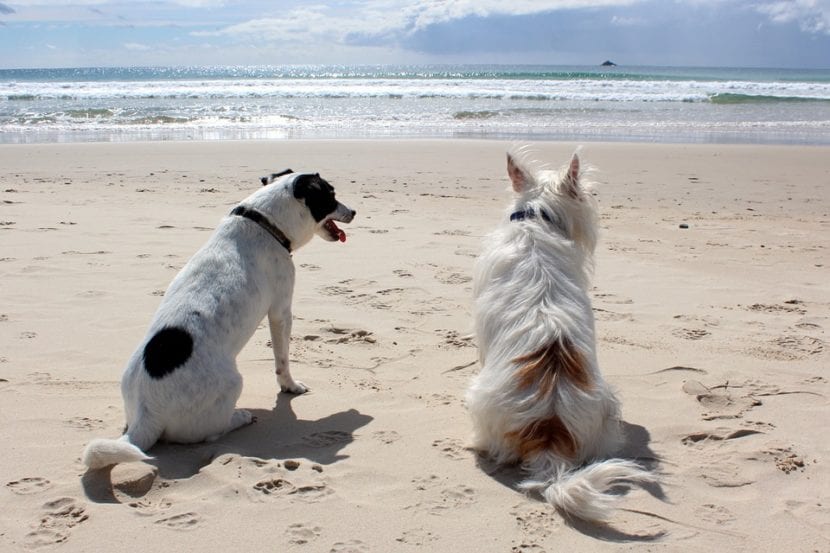
There is a growing awareness of pets, so much so that there dog friendly beachesPet-friendly hotels, ground and air transport options for your pets, adapted hiking trails, dog-friendly terraces and restaurants, etc. Before you go, always check the local regulations, as they may change over time.
In coastal areas with wild beaches or coves, as is the case in some natural spaces, it’s common to see dogs enjoying the sea, even though there aren’t always official beaches for them. It’s important that they always respect the environmentPick up its droppings, keep it under surveillance, and avoid disturbing other users.
If you are going to spend many hours outdoors or in the sun:
- Make sure it has shade and fresh water at all times.
- Avoid the hottest hours for prevent heat stroke.
- Be aware of the pads on very hot sand or asphalt surfaces.
Will my dog suffer while I’m on vacation?

It’s normal to worry about whether your dog will have a bad time while you’re gone. Whether their stay with a caregiver, friend, family member, or at a kennel is pleasant depends primarily on their well-being. character and level of socialization.
A well-socialized dog, accustomed from puppyhood to meeting different people and environments, is usually much more flexible and It adapts better to changesOn the other hand, a very sensitive dog or one with excessive attachment can experience a lot of stress if a good adaptation is not made.
To minimize stress for your dog when you can’t take him with you:
- Adapt it gradually to the place or person where they will stay.
- Have several preliminary meetings, visits, and joint walks.
- Gradually increase the amount of time they spend without you, accompanied by that person or in that environment.
- Keep their schedule routines and meals.
- let him something that smells like you (like a used garment) so that he feels more secure.
If, despite everything, your dog doesn’t react well to these types of situations, consider choosing a type of vacation in which he can also participate (dog-friendly accommodations, less crowded destinations, car trips instead of flying, etc.) and ask a trainer or ethologist for help in working on their stress and attachment management.
Spending a few days away doesn’t have to be a traumatic experience for your dog if plan aheadYou calmly choose between the different options (staying at home, going to a residence, or traveling with you) and You always prioritize their well-beingThat way, you can both enjoy your vacation knowing that he is safe, cared for, and as happy as possible.
Índice
- 1 Should I leave it at home or at the residence, or should I take it with me?
- 2 How to leave your dog at home in someone’s care
- 3 How to leave your dog at a kennel
- 4 How to travel with the dog
- 5 What to pack if you’re traveling with your dog
- 6 Beaches and activities to enjoy with your dog
- 7 Will my dog suffer while I’m on vacation?