
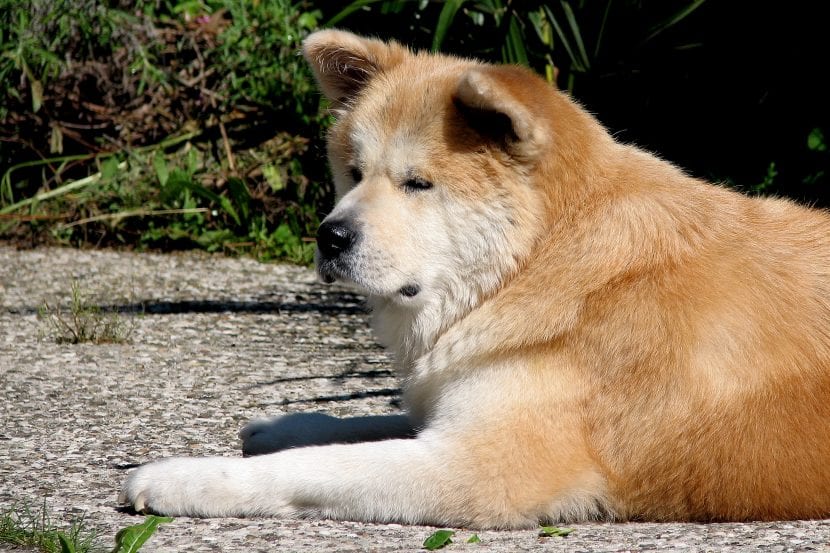
The Akita Inu dog breed is one of the more protective y more loyal that exist. They are animals that, instinctively, will try to keep all their loved ones safe from danger. This doesn’t mean they are antisocial or aggressive by nature, but rather that they will dedicate a good part of their time to take care of your family and monitor everything that happens around them.
Let’s get to know this breed better and learn how is the Akita Inu dogWhat are its physical characteristics, its character, its exercise, training, and health needs, and what type of family best suits this impressive Japanese dog?
Physical characteristics

El Akita Inu It is one of the breeds that is believed to have begun its evolution some 4 a thousand years in Japan, where it was used as guard dog, attack and also how big game hunting dog of bears and wild boars. It comes from the Akita prefecture, on the island of Honshu, and is part of the group of Japanese Spitz type dogs, with a robust body and dense fur prepared to withstand cold climates.
During different historical periods, the breed was crossed with other dogs such as the English Mastiff, the Tosa inu or German shepherd to increase their size and strength. During World War II, female Akitas were crossed with German Shepherds, and some puppies were sold to American soldiers, which also contributed to the spread of lines with a more American character. During periods of banned dogfighting and after the wars, Japanese breeders carried out very careful work to recovery of the original typeusing traditional lines such as the Matagi Akita. Thanks to this, today we have the modern Japanese Akita Inu, considered a National Treasure in your home country.
Currently, two major lines coexist: the Japanese line Akita, more faithful to the Japanese standard and highly valued as a companion dog and family guardian, and the American line AkitaThe American Akita, also known as the Akita, is slightly larger and more commonly used for guarding or working duties. Although they look similar, they are considered different breeds by several kennel clubs.
If we talk about his body, it must be said that it is a big dogwhich in many cases can weigh around 35 kg or more, with males easily exceeding that weight and females somewhat lighter. It has a body slightly longer than it is tall, a broad and deep chest, a strong and muscular back, and powerful legs capable of performing demanding work. Its feet are compact, well-closed, and have hard nails, providing excellent stability.
El fur The Akita Inu’s coat is double, dense, and thick, with a soft undercoat that protects it from the cold and a coarser, straighter outer coat. The color of its fur can be
white, Grey , Red, tabby or sesame tones, always with the characteristic pattern called urajiro in most specimens (whitish areas on the muzzle, cheeks, neck, chest, abdomen, inner part of the legs and underside of the tail, except in completely white specimens). The ears are smalltriangular, rounded at the tips, upright and inclined forwards, which reinforces their alert expression.
Su tail It’s thick and wears firmly curled up on her backwith longer hair than the rest of its body. This curly tail is one of its distinctive features. The head is proportionate to the body, with a broad skull, a slightly arched forehead, and a well-defined stop. The eyes are small, almost triangular in shape and dark in color, which convey a calm but very observant look.
Behavior
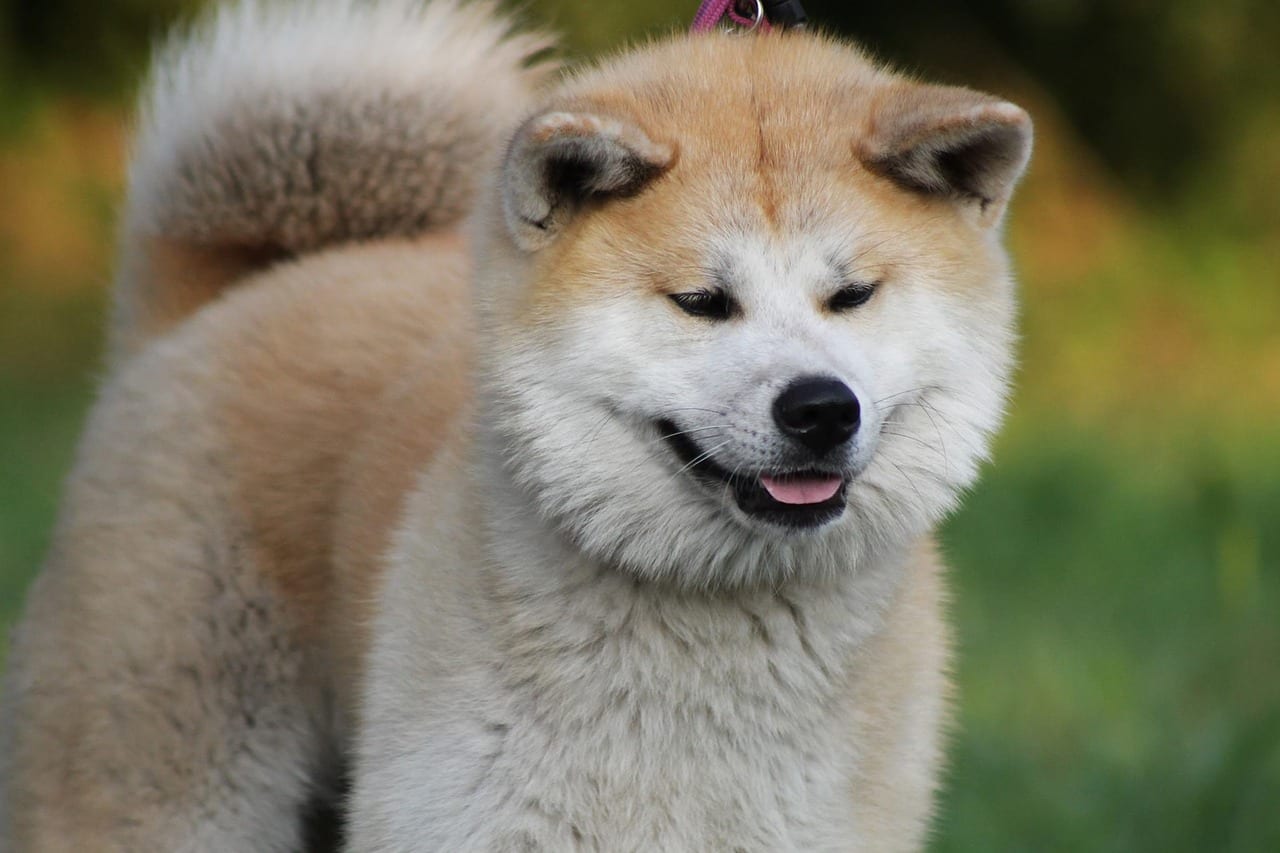
It’s a dog very loyalSo much so, that this is one of the most admired qualities of this breed. The Akita Inu bonds deeply with its family and develops a strong protection instinct towards his home and loved ones. He is also a generally docile in the family environment, but also independentwith a strong personality that does not seek to obey blindly, but tends to assess situations for itself.
It’s about a dog Relaxing at home When their needs are met, they are reserved with strangers and rarely bark without reason. Many Akitas are very quiet except when they detect something unusual, so their barking is often an important warning that should be heeded. This reserved nature has led some countries to consider them a potentially dangerous breed, and they appear on official lists, not because they are inherently aggressive, but because of their… physical strength and its potential dominance if it is not properly educated.
With his family, the Akita Inu can be very affectionate and will enjoy the toysHe enjoys cuddle sessions and quality time, although he’s not usually a dog that seeks constant attention like some more dependent breeds. He’s very patient, but to be happy needs time every daythat he be played with, that he be given exercise, and that he be included in the daily life of the home.
Also it is very important to be trained from puppyhoodUsing non-aggressive and non-violent methods. It is an intelligent dog with a strong character that can challenge inexperienced owners if it perceives inconsistencies. Therefore, it is highly recommended. train him in a positive wayalways rewarding their good behavior with prizes, petting and words of praise, avoiding physical punishments or shouting that would only generate distrust or unwanted reactions.
The Akita Inu can live comfortably in an apartment, but it needs to be taken out for exercise. walk or run dailyIdeally, you should combine leisurely walks with periods of more intense exercise and mental stimulation games. It’s not advisable to let him off-leash in uncontrolled areas unless he has very well-developed obedience training, as he may become territorial with other dogs or tend to chase small animals due to his… hunting instinct.

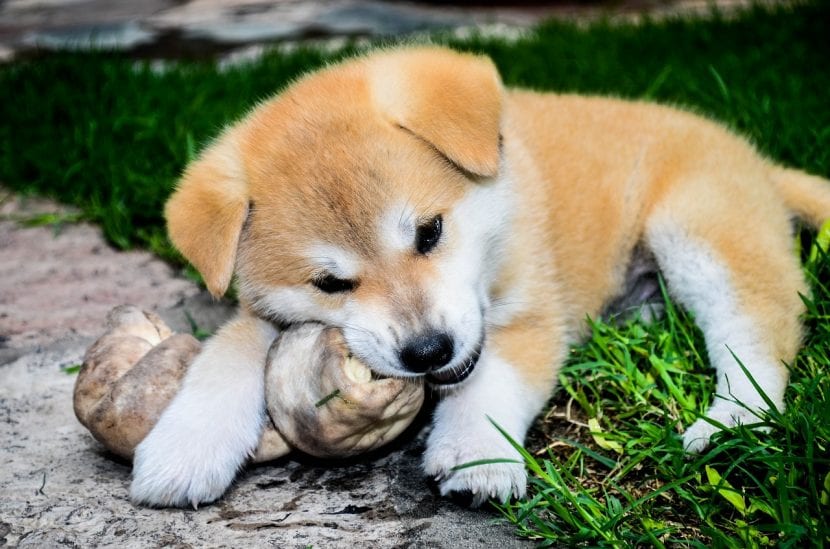
Los Akita Inu puppies they need a Early education In order to acquire discipline, obedience, and the necessary training to become well-adjusted adults, this stage is crucial for a dog to develop a strong character. Therefore, it is essential that they have varied and positive experiences with people, environments, and other animals.
When they are puppies, dogs of this breed should socialize with children, people outside the family, and other dog breeds, always in a controlled and pleasant manner. This proper socialization helps prevent them from becoming overly aggressive. protectors or excessively territorial in adulthood. The goal is for the Akita to learn to handle new situations without fear or disproportionate reactions.
At this stage it is advisable to introduce clear routines of walk, rest y gameas well as basic house rules (allowed areas, feeding times, handling being alone, etc.). Consistency and calmness from the family will be key for the puppy to feel safe and learn to respect boundaries.
Using positive reinforcement with small treats, toys, or attention helps the puppy associate learning with something enjoyable. Simple exercises like sit, come, stay, and walking without pulling on the leash will help establish a good foundation of obedience that will be crucial when the dog reaches adulthood.
Relationship with children, other dogs, and as a guard dog
In the home environment, the Akita Inu is usually balanced and stable if well socialized. With the children in the family, it can show tolerant and protective, but due to its size and strength, it’s not advisable to leave it unsupervised with very young children, nor to allow rough play or anything that might make the dog feel harassed. It’s also important to teach children to respect your spaceDo not pull his ears or disturb him while he eats or rests.
Compared to other dogs, the Akita may tend to be dominantespecially with dogs of the same sex. Early socialization and proper management of encounters on the street help minimize conflicts, but it is not generally considered the most suitable breed for living with many other dogs if the owner is inexperienced. In some cases, it can live with another dog with a compatible temperament, but this should be carefully considered.
With cats or other small pets, their strength hunting instinct This can complicate cohabitation, especially if they haven’t been socialized from puppyhood. Some Akitas can get used to a specific cat in the household, but in general, it’s not the most recommended breed if you intend to introduce it into a home full of smaller animals.
Just like guard dogThe Akita Inu is known for its silent vigilance, courage, and strong sense of territory. It’s not a dog that barks excessively, but when it detects a threat or something out of place, it can react firmly. Therefore, it’s essential that its owners have a good control about it through education and responsible management, especially in countries where it is classified as a PPP and licenses, insurance and special measures are required.
Care, health and exercise of the Akita Inu
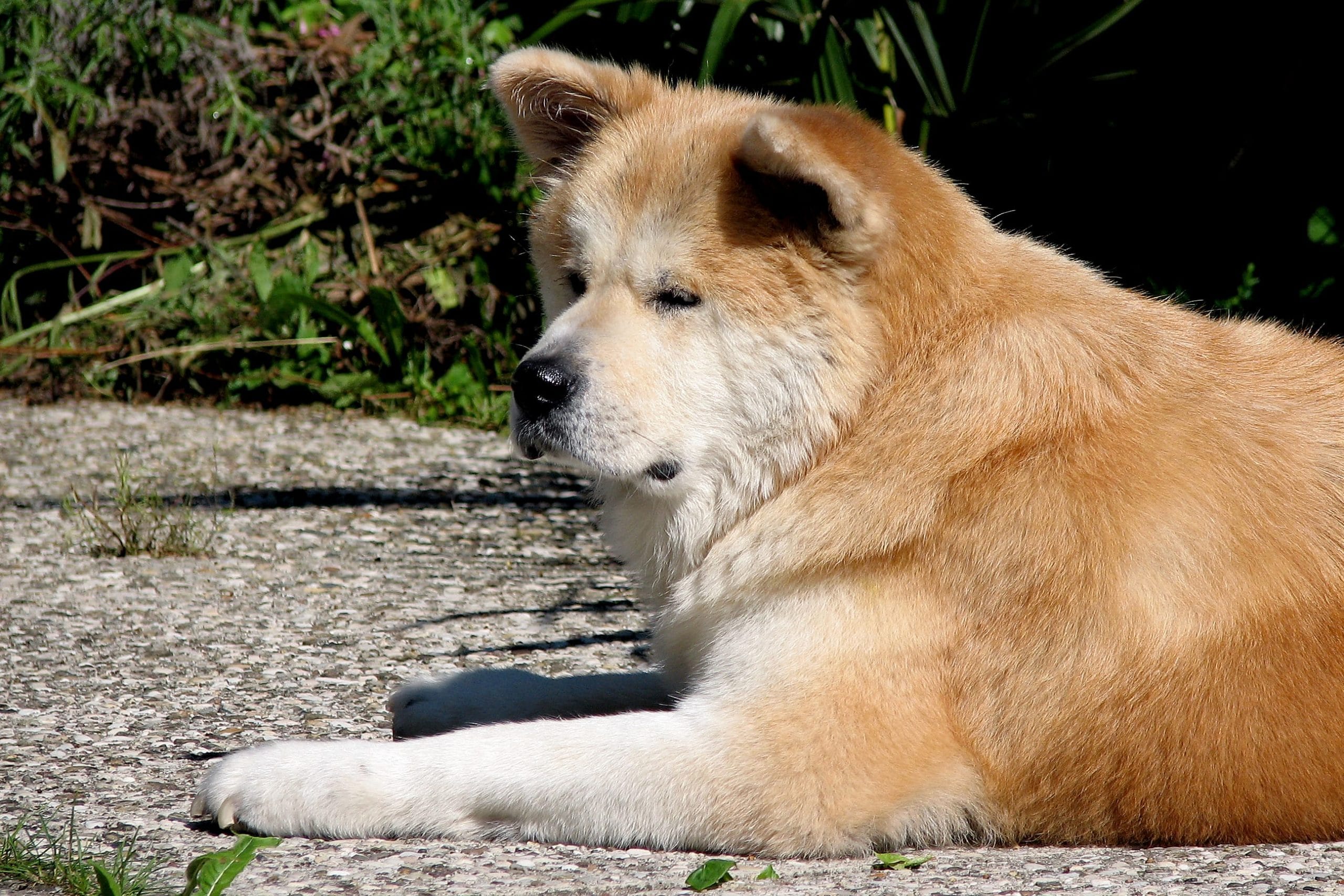
The Akita Inu needs a moderate-high energy level and requires Daily exercise To maintain physical and mental balance, it’s ideal to offer one to two hours of activity spread over several walks, combining walks with scent games, obedience exercises, and, if the dog enjoys it, canine sports appropriate to its build. In puppies and young dogs, it’s best to avoid excessive impact to protect their joints.
Regarding hygiene care, their double coat It should be brushed several times a week, increasing the frequency during shedding season when it loses a lot of hair. Baths can be given occasionally with mild shampoos. sensitive skinand it is advisable to check regularly ears, teeth y Nails To prevent infections or discomfort, products such as ear cleaners and dental snacks can help maintain good oral and ear health.
In terms of health, like many large breeds, the Akita Inu can be prone to hip dysplasia and elbow, as well as some autoimmune problems y eye diseases such as glaucoma or cataracts. Cases of HypothyroidismSkin or food allergies, sebadenitis (inflammation of sebaceous glands that causes alopecia and seborrhea), coagulation problems such as von Willebrand disease y gastric torsionespecially if the dog eats very quickly or performs intense exercise right after eating.
To reduce risks, it is essential to maintain a adequate weight, offer a balance diet (whether it’s quality feed or a properly formulated natural diet), divide the daily ration into several meals, avoid exercise immediately after eating, and go to periodic veterinary check-ups with vaccination records, deworming, and general checkups. A good breeder usually performs health tests on the parents to minimize the transmission of hereditary diseases.
If you want to pass about 15 years If you’re looking to share your life with a dog steeped in history, full of symbolism in Japanese culture, and possessing unparalleled loyalty, the Akita Inu is undoubtedly one of your best options, provided you can offer it to you. tiempo, education. and a stable environment where he can develop his full potential as a teammate.
Índice