
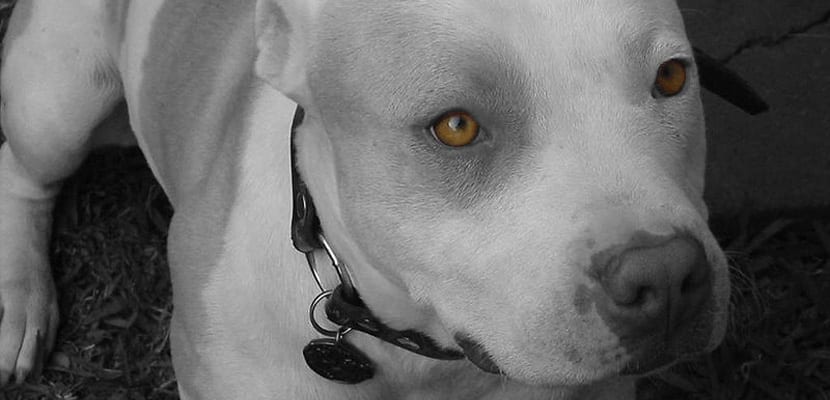
The city of MontrealIn Canada, a controversial law was passed against all of the Pitbull breed dogs and other dogs considered potentially dangerous. This legislation was expedited after the death of a 55-year-old woman who was attacked by a dog initially identified as a pit bull. Many animal shelters, politicians, and animal rights advocates have already spoken out against this law, which is generally controversial and even absurd For those who defend dogs, the fact that a dog whose owner has encouraged its aggressive side attacks does not mean that all dogs are dangerous.
In our country we have a law for PPP or potentially dangerous dogs, among which this breed is also included. However, the behavior of a single dog should not be a stigma for all those belonging to the same breed, unfairly and purely accused of being violent. ignorance about canine behaviorIn Montreal, however, specific regulations for pit bull-type dogs were pursued, framed within what is internationally known as Breed Specific Legislation (BSL)That is, laws directed at specific races.
What are the implications of banning the Pitbull breed in Montreal?

The new law for these dogs came into force effective October 3marking a turning point for the city. From that date forward, it was banned in Montreal’s districts. buy or adopt a Pitbull-type dog or similar. This point directly affected shelters and rescue organizations, since many of these dogs are still in kennels waiting for a home and, due to their bad reputation, they have difficulty finding families. The regulations even contemplated the animal sacrifice that remained in shelters without being adopted when the law began to be fully implemented.
Animal shelters and many dog lovers began to protest a measure considered disproportionate. Organizations such as the SPCA of Montreal They came to take charge of thousands of specimens, trying to to keep them safe before the regulation was fully implemented. Its aim was to prevent the mass killing of dogs classified as pit bulls simply because they belonged, or appeared to belong, to a stigmatized breed.
At the same time, some judges came to temporarily suspend key parts of the regulations, leading to an intense legal battle. It was argued that certain clauses were discriminatoryThese measures were deemed unjustifiable and invalid, as they penalized all pit bull-type dogs without considering their individual behavior. The debate on the balance between public safety and animal welfare then became central to public discussion.
These types of measures didn’t only affect Montreal. Similar regulations had already been approved in other Canadian provinces. They prohibited the ownership of pit bulls or restricted their presence in certain cities. Furthermore, the neighboring province of Ontario had its own regulations against pit bull-type dogs, which created confusion among those traveling with their pets about how to interpret these rules.
Obligations and requirements for Pitbull owners
The owners of this breed had to start to meet strict rules similar to those of the PPP law in our country. Among the requirements were the obligation to take them for walks with a muzzlealways keep them on a sturdy leash and register them in a special census with identification microchipFurthermore, they had to be sterilized, have the calendar of updated vaccines and, in many cases, it was necessary for the owner to pass a check of criminal records and pay a specific fee to obtain a special possession permit.
If these rules were broken, the dog could become sacrificedThis is a very unfair and cruel measure by the authorities against dogs that have done no wrong. Because of the actions of one, an entire breed ended up paying the price. This situation fueled the feeling that the law did not address the root of the problem, which is usually found in the lack of dog training, the negligence of some owners and the lack of effective controls on the breeding and sale of dogs.
In this context, various veterinary colleges and animal behavior experts pointed out that the Race is a terrible indicator of a dog’s aggressiveness. They insisted that there are enormous differences in behavior even within the same breed, and even more so when it comes to mestizos Crossbreeds with other breeds. Factors such as early socialization, health status, family environment, stress management, or type of training have a much greater influence than breed genetics when predicting a possible attack.
Therefore, alternative measures considered more effective in increasing public safety were proposed: a better control of breeding and sales of dogs, the creation of a national pet registry and the deployment of large awareness campaigns on canine communication, responsible pet ownership, and aggression prevention. Many organizations emphasized that, without addressing these factors, banning a specific breed only shifts the problem to other breeds or types of dogs.
The Montreal case also highlighted that even the identification of the attacking dog can be incorrect. Some subsequent analyses suggested that the animal responsible for the attack that sparked the controversy was not a purebred pit bull, but a mixture of other breedsThis reinforces the idea that basing a law on a dog’s physical appearance is unreliable.
A noble race marked by prejudice
Beyond the regulations, many people who live with pit bulls argue that it is a breed Very noble, with a great capacity for bonding with family and a strong protective instinctAt times they were known as “nanny dogs”This is precisely because of their patience with children and their willingness to closely monitor the most vulnerable members of the household. When trained with respectful methods, properly socialized, and given exercise and attention, they can be well-balanced, affectionate, and stable dogs.
Pit bulls have always been labeled by many as extremely aggressive and dangerous dogs, but numerous studies and professionals agree that the real focus is on the human who raises them and manage. The choice of training methods based on punishment, lack of socialization, neglect, abuse, or even the use of these dogs for illegal fights are factors that drastically increase the risk of undesirable behaviors.
In countries like Spain, where regulations also exist for PPPsThe debate is similar to that in Canada, the United States, or the United Kingdom: how to combine the protection of citizens with fair regulations that do not condemn a dog based on its appearance. International experience with BSL-type laws has shown that there is no solid evidence that they are truly effective in reducing the number of attacks, while they do generate animal welfare issues and overwhelm the animal shelters that try to save the affected dogs.
The recommendations from experts and veterinary colleges always follow the same line: focus on the owner’s responsibilityThis includes training on canine communication, supervising interactions with children, reporting cases of abuse or training for fighting, and strengthening controls on dog breeding and trade. In this way, both people and the animals themselves are protected, without automatically criminalizing any breed.
The case of the pit bull ban in Montreal has become a world example It highlights the extent to which legislative decisions can clash with scientific evidence and ethics regarding companion animals. It also serves as a reminder that behind every headline about “dangerous dogs” are individual stories of well-balanced dogs and responsible families suffering the consequences of laws based more on fear than on data.
This entire debate has prompted a change of focus in many places, moving from the simple label of “dangerous breed” to talking about aggressive dogs o dogs with risky behaviorsThese cases are evaluated on a case-by-case basis. This approach considers not only the breed, but also the animal’s history, handling, environment, and the specific circumstances of each incident, reducing the stigma surrounding breeds like pit bulls and promoting fairer and more effective solutions.
The controversy surrounding the pit bull ban in Montreal shows that safety and coexistence with dogs are best achieved through… education, prevention and responsible ownership that by eliminating a specific breed, and remembers the importance of not blaming the dog for mistakes that almost always have a human origin.