
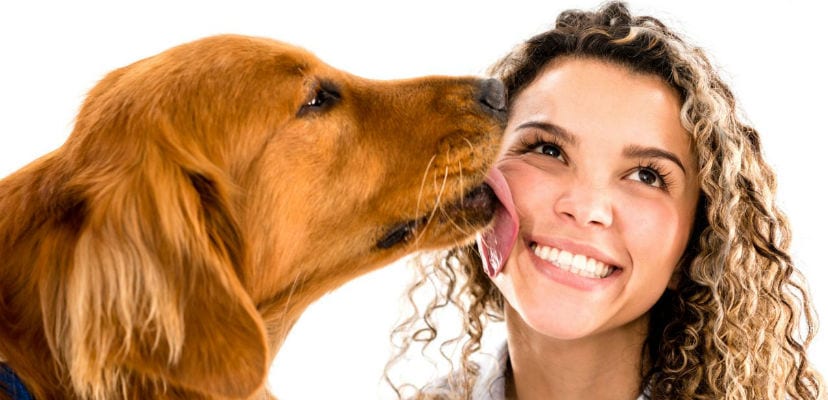
The properties of dog saliva have been the subject of debate for years. It has been said to have healing effects and can speed up wound healing, but there are also warnings about the risks of infections and disease transmission. In this article, we will take a closer look at whether canine saliva is beneficial or whether it poses risks to human health.
Does dog saliva have healing properties?
Since ancient times, man has believed that the dog saliva It has healing properties. This belief is partly due to the fact that dogs tend to lick their wounds as part of their natural instinct to clean them and relieve pain.
There are scientific studies that have shown that canine saliva contains antibacterial enzymes, such as the lysozyme and apiorphine, which can help eliminate certain bacteria and have a healing effect on minor injuries.
A study carried out in the University of Cúcuta In 2008 he concluded that living with dogs and contact with their saliva can strengthen the immune system of people. Also, an investigation of the University of Arizona found that microbes present in the stomach of dogs can act as probiotics, benefiting the intestinal flora of humans.

Benefits of canine saliva
- Antibacterial effect: Dog saliva contains enzymes that can inhibit the growth of certain pathogenic bacteria.
- Wound healing: Apiorphine present in canine saliva may have effects anti-inflammatory and pain relievers.
- Stimulation of the immune system: Exposure to certain microorganisms in dog saliva may strengthen human defenses.
- Removing dirt residue: By licking a wound, dogs can remove debris and particles that could hinder healing.
Risks and disadvantages of canine saliva
Despite the benefits mentioned above, dog saliva carries certain dangers that should not be ignored.
- Presence of harmful bacteria: The mouth of dogs is home to microorganisms such as Capnocytophaga canimorsus, which can cause serious infections in immunosuppressed people.
- Delayed healing: Although saliva cleans superficially, its continuous humidity can hinder tissue regeneration.
- Allergic reactions: Some people may be allergic to proteins present in canine saliva, which can cause symptoms. cutaneous and respiratory.
- Disease transmission: It has been identified that dogs’ saliva may contain bacteria such as Escherichia coli, Salmonella y Campylobacter, which can be harmful to humans.

Is it safe to let our dog lick us?
While contact with dog saliva may offer some benefits, it is important to take Precautions to avoid health problems.
- Checking the dog’s health: Make sure your pet has up-to-date vaccinations and regular veterinary check-ups.
- Avoid contact with open wounds: Do not allow the dog to lick cuts or ulcers to prevent infection.
- Handwashing: After interacting with the dog, especially if he has been licking.
- Watch for symptoms of infections: If redness, swelling or fever appear after contact with saliva, consult a doctor.
[related url=”https://www.mundoperros.es/que-es-la-coprofagia-canina/”]
Dog saliva is a complex liquid that can have certain benefits thanks to its antibacterial enzymes and its immunomodulatory effect. However, it also harbors significant risks such as the transmission of infections and potential allergies. To enjoy the company of our pet without compromising our health, it is best to know the pros and cons of their saliva and take appropriate precautionary measures when interacting with them.
Índice