
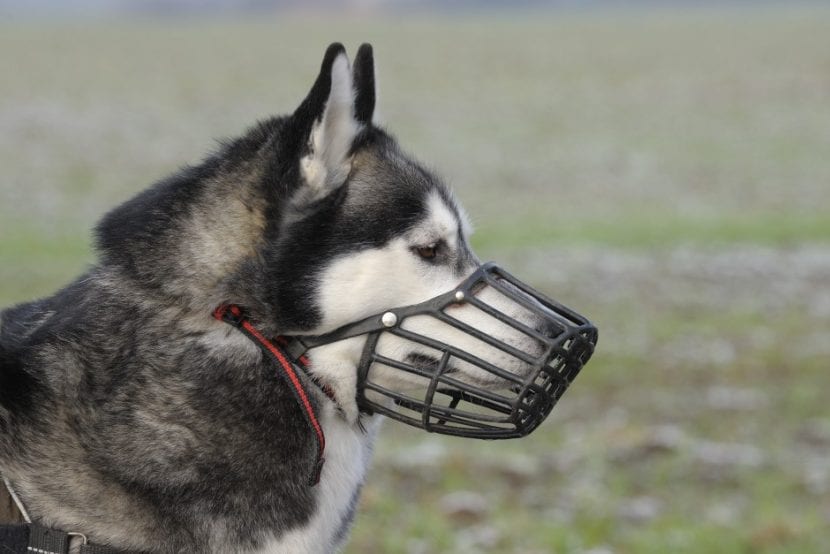
The dog is another member of the family and, as we would do with a child and even with nephews or grandchildren, we have to educate him so that they know how to behave properly and can live happily and harmoniously in society. However, sometimes we acquire or adopt one who has such a strong character that it isn’t entirely compatible with our own, and that’s when the possibility of problems arising problems of coexistence or security it shoots.
In addition, if it is also a breed considered potentially dangerousThen we will find ourselves in an even more delicate situation due to the legal obligations involved. To prevent this from happening, it is important to know the details. when to muzzle a dogWhat the regulations say, in what other cases it is advisable to use it, and how to do so in a way that is respectful to the animal.
Legal obligations regarding the use of muzzles on dogs

According to Spanish law on the possession of potentially dangerous animals and its implementing regulations, all dogs considered to be of a potentially dangerous breed (PPP), as well as their crosses, They must wear a muzzle in public spacesRegardless of their temperament and how well-behaved they are, this, although it may seem unfair to many responsible owners, should always be kept in mind when living with a potentially dangerous dog (PPP) if we want to avoid significant financial penalties. In some cases, the fines can be substantial. from 300 to 2400 euros, depending on the severity of the infraction and the applicable regulations.
In addition to the official list of breeds, the regulations stipulate that any dog with certain physical characteristics and behavior (For example, large size, very muscular appearance, powerful jaw, and a history of aggression) may be considered potentially dangerous by the competent authority. In that case, it may also be required mandatory use of muzzleA non-extendable leash no longer than two meters, an administrative license, specific registration, and liability insurance are required. For a general list of breeds and characteristics, you can consult specialized sources such as the guide on potentially dangerous dogs and current regulations.
Failure to comply with these legal obligations may result in significant fines and even, in the most serious cases, administrative measures concerning the animal. Therefore, in addition to consulting state legislation, it is always advisable to review the municipal ordinances and regional regulationsas some communities expand the breeds or profiles of dogs required to wear muzzles and tighten the conditions.
There are also environments where muzzles may be mandatory for any dog, even if it’s not a potentially dangerous breed., such as certain public transport services (subway, commuter trains, some buses or boats), as well as in certain regulated public spaces (parks, dog beaches or enclosed areas) where this obligation is expressly indicated in their rules of use.
When to muzzle a dog for safety and behavior

Apart from strictly legal situations, the muzzle is a security tool which can be advisable in many other contexts. When used correctly, it should not be seen as a punishment, but as a preventative measure that protects both the dog and the people and other animals around it.
One of the clearest situations is when the dog has already shown aggressive behaviors. If the dog has already bitten someone, regardless of whether it is purebred or mixed breed, you will have to put a muzzle on it every time you take it for a walk.especially until you address their behavior with a professional. It is also recommended for use in:
- Reactive or very nervous dogs with other dogs or people, who bark, lunge, or show an intention to attack.
- Dogs with intense fear or anxiety in certain situations (visits to the vet, dog grooming, crowds, presence of children or strangers).
- Visits to the vet when pain or uncomfortable handling is anticipated, to avoid bites due to fear or stress.
- Dog grooming sessions if the dog becomes uncomfortable with handling, noise, or cutting tools.
- Dogs that pick up food, garbage, or dangerous objects from the ground, such as spoiled remains, bones, stones or even feces; in these cases the muzzle can be a support while you work on education.
In addition, It might be interesting for some people to put a muzzle on their dog to prevent it from eating things on the groundsuch as feces or other remains that can cause digestive problems or poisoning. However, it should be noted that, with patience and effort, it is possible to prevent the animal from ingesting things it shouldn’t by positive trainingFor example, by redirecting him with a treat to the place we want, by asking him to “sit” and giving him the treat, or by teaching him commands like “drop it” and “leave it.”
Likewise, if it is a reactive animal, that is, if it becomes very nervous when it is with others of its species to the point that it intends to attack them, for its safety and your peace of mind it is advisable that it wears a muzzle until, with the help of a dog trainer who works with positive reinforcementLearn to behave. In these cases, a muzzle should never be the only option. only measure to manage the problem; it should always be accompanied by a behavior modification program individualized.
Types of muzzles and maximum usage time

The muzzle is a A very useful tool for correcting unwanted behaviors in some dogs; however, special attention must be paid to their placement and manufacturing materialsSince not all muzzles are suitable for all dogs, many animals may suffer because of this. damage and even death if not used properly.
In the market there are different types of muzzles And each one has a series of advantages and disadvantages that you should know before choosing:
- Cloth or nylon muzzleLightweight and inexpensive, but it severely restricts mouth opening and prevents normal panting. It is only recommended for short periods of timesuch as a one-off visit to the vet or a very specific handling situation. It should not be used for more than a few 15-20 minutes straight nor in active or hot dogs.
- Mesh or band type muzzleIt is placed like a band around the muzzle. It is similar to cloth muzzles, so it should only be used occasionally and under strict supervision, never for long walks or physical exercise.
- Basket muzzle (made of metal or sturdy plastic): allows the dog Open your mouth, pant, drink water, and receive rewards.It is the most recommended for prolonged use (walks, public transport, re-education work), provided it is properly fitted. Metal collars should be handled carefully to avoid blows to the muzzle; well-designed plastic or biothane collars are safer.
- Leather muzzleIt can be very durable and comfortable if well made, although it is usually more expensive. It must also allow for proper mouth opening.
- Adjustable muzzlesSome models allow for better adaptation to different snout shapes, which is useful for dogs with intermediate morphologies, always respecting the ability to pant.
It will depend mainly on the type of material the muzzle itself is made of. maximum safe usage durationThose made of fabric or nylon are recommended for very short periods, while the basket-type muzzle, for example, is more suitable for long walks or if the dog is going to be physically activeIn all cases, care must be taken to prevent the muzzle from becoming a difficulty breathing or pantingespecially in brachycephalic breeds (flat snouts), in which its use may be directly inadvisable or require veterinary supervision.
How to choose the correct size and put on the muzzle

When choosing the ideal muzzle for your dog, it is essential that you respect its anatomy and breathing needs. The circumference of the muzzle should be larger than the dog’s snout.Otherwise, the animal will be unable to open its mouth to pant. Also, keep in mind:
- Appropriate sizeThe muzzle should not be too loose (it could be removed or get caught) nor too tight (it could cause chafing, injuries or make breathing difficult).
- ComfortYou must allow the dog Pant, lick yourself, and drink waterA muzzle that rubs or pinches will eventually cause rejection and stress.
- Expected useA muzzle for a long walk that for a very short visit to the vetFor prolonged use, the basket type is the most appropriate.
- safe materialsIt’s best to avoid muzzles that completely close the snout and rigid ones that are too small. It’s also advisable to avoid metal models that could cause injury, especially in very active dogs.
The muzzle must allow the dog to open your mouth to pantlick and drink. Before starting to use it in real situations, it is advisable to perform a progressive desensitization through positive reinforcement, introducing it little by little, putting it on for seconds and gradually increasing the time.
How to get your dog used to a muzzle without stress

First of all, you must understand that the muzzle, especially the first few times you use it, is a strange item for your dogTherefore, several procedures must be combined to adapt the dog satisfactorily and so that it does not experience it as a punishment.
- First, we will create a positive contingency between the muzzle and foodWe will show the muzzle while offering something very appetizing to eat, then hide it and make the food disappear. In this way, a positive association upon its appearance (muzzle → food), while its disappearance will be linked to the non-occurrence of anything noteworthy.
- Subsequently, We will encourage the dog to put its snout in the muzzle.To do this, we can spread wet food or treats on the bottom. Associating a word with introducing the snout (for example, “muzzle”) helps the process. This technique, based on the operant conditioningIt requires short, frequent repetitions.
- Once we have overcome these phases, it is time to tie the muzzle for a few seconds during one of the repetitions. To prevent behaviors such as crawling, hiding, or trying to remove it, we recommend continuing with gentle play, caresses, and rewards while wearing it.
- If at any point the dog becomes overwhelmed or tries to take it away insistently, we should return to the previous step and proceed more slowly. In situations where we must use the muzzle unexpectedly, we can use small treats continuously to prevent the experience from being traumatic.
The goal is for the dog to perceive the muzzle as a everyday accessory plusJust like a collar or harness. Generally speaking, all dogs should know how to wear a muzzle, even if they don’t need it every day, to avoid unnecessary stress if its use becomes mandatory at some point (due to illness, transport, local regulations, etc.).
The muzzle is a very controversial item. For some, it is essential to prevent bites and avoid the ingestion of objectsWhile for some it’s a method of punishment that restricts the dogs’ freedom, for others it’s a form of punishment. It all depends on how we use the muzzle and the… knowledge of canine anatomy and behavior that the owners have. Well used, with a suitable model and within a respectful education planIt becomes a very useful tool for achieving safety without compromising the animal’s well-being.
Despite some regulations we may disagree with, the use of muzzles for dogs is mandatory in Spain under certain conditions. And while the designation of a dog as potentially dangerous may seem entirely unnecessary and unfair, the owner’s responsibility lies in knowing the law and choosing the right muzzle. correct muzzle and the right sizeGet the dog used to it in a positive way and always rely on education and training instead of using the muzzle as a permanent solution to behavioral problems.
Índice