
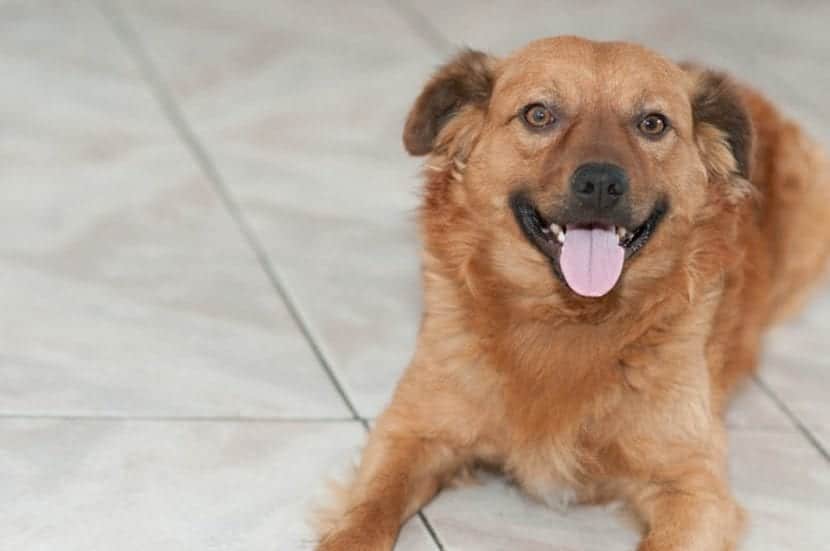
There’s nothing more unpleasant than seeing your furry best friend… eating their fecesAnd the funny thing is, many times he looks at you with that sweet little face, intending to give you a kiss. It’s undoubtedly one of the situations we most urgently need to avoid… or resolve. But, how?
To find the answer to that question it is first important to know why does my dog eat his feces. So, without further ado, let’s see what the origin of this behavior is.
One of the main causes is the nutritional deficiencyEither because the dog’s own body cannot absorb all the nutrients that the feed has due to kidney disease, or because the food we give it is not entirely correct. In any case, before making any changes to his diet, it is important to go to the vet to tell us exactly what is happening to him, and how it is treated.
Continuing with the topic of food, there are some dogs that eat their feces because they are not given the amount they need based on their weight, age, physical activity and type of foodFor example, an adult dog weighing 32kg, with moderate activity, should be given around 370-380 grams per day as long as the food is of high quality (the amount will be greater if it is of medium quality and even more so if it is of low quality). Read the label from the bag of feed to know how much you have to give your friend.
Another reason may be that your dog is older and has trouble controlling your bowels. He may fear your reaction, so he chooses to eat his feces. In this case, you have to make him see that nothing is wrong, that he is not going to be scolded (neither should you look at him with a bad face, or speak to him in a tone of displeasure).
If your dog has separation anxiety He will do anything to get your attention, even eat his own feces. Therefore, you must seek help to treat anxiety.
What is canine coprophagia and why is it considered normal in some cases?

Is named coprophagia to the habit of ingesting feces. It may be autocoprophagy (eats his own), intraspecific (from other dogs) or interspecific (of other animals). It falls within the picawhich is the ingestion of non-food substances specific to the species. It is common in dogs And in many cases, it disappears with maturity.
There is a form of coprophagia that is not pathological: maternalThe bitches clean the whelping box by ingesting the puppies’ feces to maintain hygiene and reduce the risk of infection. enfermedades or predators. Some puppies may imitate This behavior is temporary.
Most common behavioral causes

- Avoid reprimandsIf the dog has been scolded for relieving itself in inappropriate places, you can try remove the evidence eating feces.
- Stress, anxiety or boredom: the lack of stimulationLoneliness or changes in the environment (moving, new members) favor the behavior.
- Demand for attentionSome dogs learn to do it It causes a reaction from the tutor, reinforcing the habit.
- Submission and imitationWhen living with other dogs, they may eat feces because submission or by copying others.
- Olfactory curiosityThe feces contain pheromones and strong smells; those of herbivores or high-protein diets may be more appetizing.
- Poor environmental hygieneIf the environment is dirty, the dog may try clean up their space with this behavior.
Nutritional and health causes you should rule out

Besides quantity, the quality and the ability to absorption of nutrients. Low-quality diets or animals with bad digestion They can look for enzymes and nutrients in feces.
- Endocrine diseasesHyperthyroidism or Cushing’s syndrome increase the appetite.
- Digestive disorders: exocrine pancreatic insufficiency, SIBO, or syndromes of malabsorption They predispose you to certain behaviors. For digestive problems, consult how. Treating indigestion in dogs.
- Diabetes and parasitic infections: they can generate hungry and encourage the search for unusual foods.
- Aging: older dogs with incontinence or cognitive impairment may cause them to eat feces due to environmental management or confusion.
Health risks and hygiene measures
Eating feces exposes you to pathogens and toxins (bacteria, viruses, parasites). There is risk of zoonosis for the family, especially in childrenPregnant women and immunocompromised individuals are at higher risk. The most common signs after ingestion are: vomiting, Diarrhea y halitosisThe key measure is pick up immediately the droppings and keep the environment clean.
How to stop your dog from eating feces
– Check with your veterinarian about diet and, if appropriate, introduce more food digestible o digestive supplements recommended by the professional.
– Increases the exercise, walks with sniffing and the enrichment (dispensing toys, search games) to reduce boredom.
– Work on training with positive reinforcement: teaches «leave it” Y “come“Rewards when it ignores feces and avoids the punishments.
– Supervise and use a leash in areas with excrement; if living with cats, place the sandboxes in areas inaccessible to the dog.
When to go to the vet and what tests they may order
Check if the habit is persistent; there are pérdida peso, diarrhea Recurring symptoms, changes in appetite, or apathy. The professional may recommend a coprological analysis (parasites), blood tests, tests of pancreatic function and hormonal assessment. With the diagnosis, the following will be prescribed: treatment appropriate and a behavioral plan.
He will stop eating his own fecesBe patient and you’ll see how you achieve it ..
Understanding that coprophagia has multiple causes (behavioral, nutritional, and medical), minimize the risks with hygiene, and combine veterinaria, environmental management and training This is the most effective way to solve the problem in the long run; consistency and positive reinforcement make all the difference. With these tips, your dog will stop eating its feces. Be patient and you’ll see how you succeed ..
[related url=”https://www.mundoperros.es/avoid-dog-eating-feces/”]
Índice